

Founding Story
I have been both to the queer and disability pride parades in New York City. The queer pride parade is always crowded and festive with onlookers lining the streets all along the parade route and businesses prominently displaying rainbow color pride flags. The disability pride parade was marked with joyful wheelers and marchers but drew a very low audience. No businesses display the disability flag. This lack of turnout makes me want to drag my queer disabled peers into more celebrations that honor all their identities. How do we support more people to do this?
I'd like to explore this question with you. One barrier I see is a lack of physical spaces in which to meet people. I've tried to organize gatherings for my cerebral palsy (CP) support group. I mentioned to one bar that we might have around 10 people with wheelchairs, walkers, crutches, and canes there. They seemed daunted by this request and said that I'd have to rent out their whole space to accommodate that many wheelchairs. When I want to hang out with my walking friends I never have to call ahead to see if we can be accommodated or asked to rent out the space. We just show up. Determined to find a space that would house us I began to organize and found a mostly accessible venue with an outdoor space in Brooklyn, NY. However, these spaces are few and far between. None are close to accessible transit options. I figure if I can't find an accessible nightclub in NYC do they exist?
While we need more accessible buildings of all kinds, Crip the Rainbow is especially advocating for more nightlife. Culturally, most adults have been to late night establishments. However, many disabled and chronically ill people have little access to these spaces. Again learnings from my CP support group, it is difficult to meet other disabled people. Perhaps similar to the LGBTQ+ community, there may be no members of your immediate family who share your disability identity and like the queer community we need more public gathering spaces in which to form our community. Also, several disabled people don't receive health and sex education. We have a lot of questions around safe and accessible sex that can be appropriately explored at nightlife venues. Please join Crip the Rainbow in creating more intentional disabled and queer led virtual and in person spaces that celebrates artistic expressions, community formation, and the building of healthier relationships.

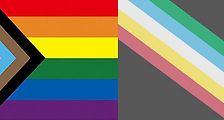
Our Logo: The Queer and Disability Pride Flags
Background on the LGBTQ+ Flag: The rainbow was chosen as a representation of inspiration. The different colors represent togetherness despite LGBTQ+ people coming from all different races, ages and genders. Being queer is more than the rainbow. It includes sexual orientation, sexual attraction, romantic orientation, and gender identity with room to grow. It's creator was Gilbert Baker, was a artist, designer, Vietnam War veteran and drag performer.
Background on the Disability Flag: Colors are muted for better accessibility. The black background represents mourning for the members of the disability community that have lost their lives from Ableist violence, negligence, eugenics and/or suicide, and also serves as a color of rebellion and protest. The parallel lines represents the intradependence between members of the disability community. The five colors represent the diversity of experiences within disabilities: Mental Illness, Neurodiversity, Invisible and Undiagnosed Disabilities, Physical Disabilities, and Sensory Disabilities.